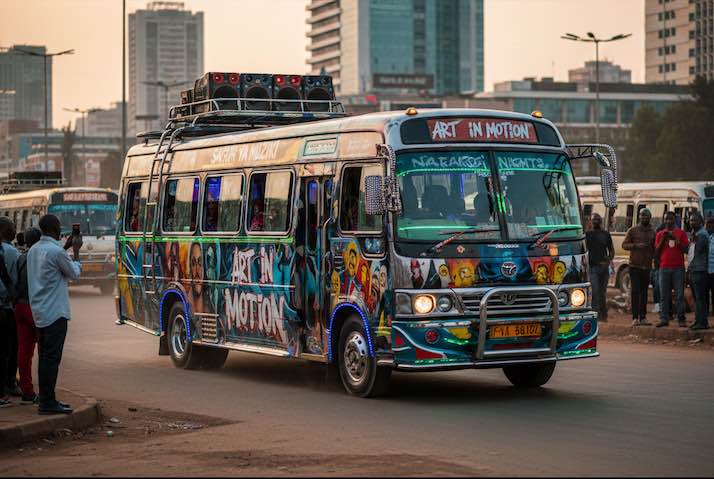
When you step onto Nairobi's bustling streets, one phenomenon immediately captures your attention—the matatus. These aren't ordinary public transport vehicles. They're mobile nightclubs, moving art galleries, and cultural statements all rolled into one. With booming sound systems, neon lights, and jaw-dropping graffiti covering every inch, Kenya's nganya culture has transformed public transport into a celebrated art form that's uniquely Kenyan.
The Birth of a Cultural Icon
The matatu story begins in the early 1960s, shortly after Kenya gained independence. The name itself derives from the Swahili phrase "mapeni matatu" (three pennies)—the original fare charged for a ride. What started as dilapidated Ford Thames vehicles, remnants from British soldiers in Ethiopia during World War II, has evolved into a multimillion-dollar industry that moves millions of Kenyans daily.
Since the early 1960s, matatus have provided transportation to at least 60% of Nairobi's population, becoming the largest employer in the city's informal economy by supporting mechanics, conductors, drivers, artists, and countless associated businesses. Today, the industry generates over Sh250 billion annually and creates more than two million jobs across Kenya.
What Makes a Nganya?
The term "nganya" (or "manyanga") refers to the most extravagant, customized matatus that spare no expense in passenger comfort and visual impact. These aren't just decorated vehicles—they're carefully curated experiences.
A proper nganya features:
Exterior artistry: Elaborate graffiti depicting everything from international celebrities like Tupac Shakur, Kanye West, and Barack Obama to local heroes, religious imagery, and pop culture icons. Each design tells a story, whether celebrating musicians, honoring political figures, or expressing street philosophy.
Interior entertainment: High-end sound systems (locally called "debe"), multiple flat-screen TVs, LED lighting synchronized to the music, and plush seating that rivals some nightclubs.
Bold slogans: Wordplay and clever phrases painted across the vehicles—"Money Talks, We Translate," "Kenya's Number One Siku Zombotote" (Kenya's number one always), and faith-based messages like "Jesus Take the Wheel."
Thematic design: From movie-themed matatus like "Baba Yaga" (inspired by John Wick) to sports-themed designs celebrating football clubs and athletes, each nganya has its own distinct personality.
The Golden Era and Government Clampdown
The matatu culture truly blossomed during the 1980s and 1990s, fueled by hip-hop's growing influence. Matatus became faster, louder, and more colorful—embodying youthful rebellion and creative expression. However, in 2004, the government introduced strict regulations banning matatu artwork as part of efforts to restore order to the industry, requiring all vehicles to display only a simple yellow line.
For nearly a decade, the vibrant canvases disappeared from Nairobi's streets. But in 2013, President Uhuru Kenyatta lifted the ban, recognizing graffiti as a legitimate source of youth employment. The culture roared back stronger than ever, with matatu owners investing millions of shillings in transforming their vehicles into rolling masterpieces.
The Artists Behind the Canvas
The nganya revolution wouldn't exist without the talented graffiti artists who bring these visions to life. Young creatives like Cliff Khalifa from Kayole, Babel Gody (the visionary behind Rongai's famous "Detroit" matatu), and Patrick Kimweli (known as "Speck") have turned matatu design into a respected profession.
These artists can earn between Sh100,000 to Sh250,000 per project, transforming what was once considered mere vandalism into a lucrative career. The work involves airbrushing, custom paint jobs, vinyl decals, and digital printouts—all requiring immense skill and creativity.
Graffiti artists draw inspiration from trending topics, whether it's the latest Hollywood blockbuster, popular musicians, or significant global events. The matatu becomes a conversation starter, reflecting the cultural pulse of Kenya's youth.
Legendary Nganyas That Rule the Streets
Kenya's matatu scene has produced true legends—vehicles with cult followings that compete annually at the prestigious Nganya Awards:
Opposite (Manunda): The undisputed champion, crowned "Kenya One" four consecutive times at the Nganya Awards. Operating along the Umoja route, this red and white Canadian flag-themed matatu features graffiti of Pope Francis flanked by nuns with the slogan "We are number one, and it's NUN-negotiable". It has become synonymous with excellence in the industry.
Baba Yaga: Named after John Wick's nickname in the film franchise, this Ongata Rongai matatu pays homage to Keanu Reeves' iconic character with dramatic artwork and an equally dramatic crew.
Detroit: Another Rongai favorite inspired by the Detroit Lions NFL team, sporting blue and white colors. Detroit won the "Makeover of the Year" (Riko of the Year) at the 2025 Nganya Awards, recognizing its impressive transformation.
Mood: Owned by George Ruto, the President's son, this Embakasi matatu reportedly cost Sh14 million to modify and can generate up to Sh100,000 in a single day, with private hire rates reaching Sh300,000 for three days.
Phenomenal: Known as the first Kenyan matatu equipped with a Starlink receiver, it won "Best Sound" at the 2025 Nganya Awards, proving that technology and tradition can merge beautifully.
The Nganya Awards: Celebrating Excellence on Wheels
Since its inception, the annual Nganya Awards Festival has become a major cultural event in Nairobi's calendar. Held at the Kenyatta International Convention Centre, the awards feature 44 categories showcasing Kenya's thriving matatu culture, recognizing everything from best-maintained vehicles to top graffiti artists, drivers, and SACCOs.
The festival isn't just about flashy vehicles—it's a full cultural spectacle featuring live music performances, fashion shows, dance battles, and vehicle showcases. Categories include Best Maintained, Best Makeover, Kenya One (top vehicle), Best SACCO, Crew of the Year, and Graffiti Artist of the Year.
More Than Transport: Cultural Impact
Matatu culture represents something deeper than efficient transportation—it's a form of youth empowerment, economic opportunity, and cultural identity.
Economic engine: The matatu industry operates almost entirely without foreign aid or government subsidies, representing genuine local entrepreneurship. It provides direct and indirect employment to millions, from drivers and conductors to mechanics, fuel station workers, and body shops.
Artistic platform: With matatus serving as moving canvases, young artists who might otherwise struggle to find formal employment can now earn substantial incomes while showcasing their talents to thousands daily.
Youth expression: In a country where young people face high unemployment and limited opportunities, matatus offer both economic prospects and a platform for self-expression. The slogans, music choices, and artwork reflect the aspirations, frustrations, and creativity of Kenya's urban youth.
Musical influence: Matatus have become mobile stages for Kenya's music scene, especially gengetone, drill, and gospel. Many emerging artists gain their first audience through matatu playlists, with DJs curating tracks that passengers will hear repeatedly during their commutes.
Community identity: Different routes develop distinct identities. Umoja's route is known for Opposite's dominance, Ongata Rongai's route 125 boasts multiple celebrated nganyas, while Embakasi's route 33 hosts fierce competition among flashy vehicles.
The Crew: Drivers and Conductors as Cultural Ambassadors
No nganya is complete without its crew. Drivers (called "dere" or "pilot") and conductors (known as "makanga," "donda," or "manamba") are integral to the matatu experience. They're not just transport workers—they're entertainers, hype men, and the face of their vehicle.
The best crews develop loyal followings. They know regular passengers by name, create inside jokes, and generate an atmosphere that makes even rush-hour commutes enjoyable. Their energy, catchphrases, and customer service can make or break a matatu's reputation.
Challenges and Controversies
Despite its cultural significance, the matatu industry faces ongoing challenges:
Regulatory battles: Authorities periodically crack down on loud music, excessive lighting, and flashy modifications, viewing them as distractions to road safety. The tension between creative expression and regulatory compliance remains constant.
Safety concerns: Matatus have historically been associated with reckless driving, accidents, and disregard for traffic rules. While improvements have been made, the stereotype persists.
Corruption: Bribery involving traffic police remains endemic, with matatu operators frequently paying "taxes" to avoid harassment and vehicle impoundment.
Competition from technology: App-based ride-sharing services and proposed bus rapid transit systems threaten to disrupt the traditional matatu model, though the cultural experience they offer remains difficult to replicate.
Economic vulnerability: The industry's informal nature makes it susceptible to disruptions—during protests and demonstrations, matatus can lose up to 40% of daily revenue, with Nairobi alone recording losses of Sh150 million in a single day.
Global Recognition
Kenya's matatu culture has captured international attention. Global media outlets including BBC, CNN, and VICE have featured documentaries on the phenomenon. International artists visiting Kenya, like American singer Trey Songz, have made riding in nganyas part of their cultural experience.
The artistry has even influenced diplomatic relations. In 2025, the UK High Commission commissioned renowned graffiti artist Graff Matwana to customize diplomatic vans with matatu-style artwork ahead of King Charles' state visit—a testament to how matatu culture has evolved from street subculture to recognized national heritage.
The Commuter Experience
Riding a nganya is unlike any other public transport experience globally. As you board, you're immediately enveloped by booming bass, flashing LED lights synchronized to the beat, and the conductor's energetic calls for passengers. The interior might feature portraits of your favorite artist or athlete, inspirational quotes, or humorous slogans.
The music selection varies by route and time of day—reggae and hip-hop dominate many vehicles, while some play gospel exclusively. The volume is always loud, the vibe always energetic. For many young Kenyans, choosing which matatu to board isn't just about the destination—it's about the experience.
Where to Experience Nganya Culture
For visitors and enthusiasts wanting to experience authentic nganya culture, several Nairobi stages serve as epicenters:
Kencom Stage: The heart of Nairobi's matatu operations, where routes converge and some of the most decorated nganyas load passengers.
Railways Stage: Home to Rongai-bound matatus, including legendary vehicles that play loud music and display animated lights even during daylight hours.
Odeon Cinema Stage: The Githurai route base, known for fast, flashy, and unapologetically loud nganyas that embody pure street energy.
Umoja Route: The domain of Opposite and other celebrated vehicles, this route consistently produces award-winning nganyas.
Many matatu tour companies now offer cultural experiences, allowing visitors to book specific nganyas for city tours, road trips to destinations like Naivasha, or even safari transfers—experiencing Kenya with the authentic soundtrack and aesthetic of local life.
The Future of Nganya Culture
As Kenya modernizes its transport infrastructure with plans for commuter rail expansion and bus rapid transit systems, questions arise about the future of matatu culture. However, the industry's adaptability and cultural significance suggest it will continue evolving rather than disappearing.
Digital payment systems like M-PESA are already integrated into matatu operations. GPS tracking and fleet management systems are improving efficiency and safety. Some progressive SACCOs are even exploring electric matatus, though the challenge of maintaining the elaborate sound systems and entertainment features remains.
What seems certain is that nganya culture has transcended its transport function to become an essential part of Kenya's urban identity—a daily reminder that even utilitarian services can be transformed into expressions of creativity, community, and pride.
Conclusion
Kenya's matatu art and nganya culture represent more than colorful vehicles and loud music. They embody the entrepreneurial spirit, artistic innovation, and cultural dynamism of a nation that refuses to let transportation be boring. From humble beginnings as repurposed military vehicles charging three pennies per ride, matatus have evolved into a multibillion-shilling industry that employs millions, showcases incredible artistry, and provides daily joy to countless commuters.
In a world of standardized public transport, Kenya's nganyas stand out as proof that utility and creativity can coexist—that the journey can be just as important as the destination. Whether you view them as an essential service, a moving art gallery, or a cultural phenomenon, one thing is undeniable: matatus are Nairobi, and Nairobi is matatus.
The next time you're in Kenya's capital and hear the bass thumping from down the street, see the flash of neon lights and elaborate graffiti approaching—don't just see a matatu. See a canvas, a stage, a business, and a cultural movement all in one. That's the magic of nganya culture.




Comments
Post a Comment